One of the strangest festivals in Britain. Gunpowder, treason, and plot.

https://commons.wikimedia.org/wiki/File%3AAnonymous_Guy_Fawkes_Mask_Scientology_Protest_Minneapolis_2255698712.jpg
Level 1: Beginner
Vocabulary
- Catholic / Protestant (noun/adjective): Two different types of Christians.
Example: Her father is Catholic, but her mother is Protestant. - To blow up (phrasal verb): To destroy something with a bomb or explosives.
Example: The soldiers used a bomb to blow up the old bridge. It went BOOM! - Gentleman (noun): In the past, a man from a rich and important family. Today it means a man with good manners.
Example: He was a true gentleman and always treated people kindly. - Explosive (noun): Something that can blow up, like a bomb.
Example: The police found explosives inside an empty building. - To kidnap (verb): To take a person away and keep them somewhere when they do not want to go.
Example: The criminals planned to kidnap a rich businessman and ask his family for money. - Barrel (noun): A big, round container made of wood or metal for keeping things like wine or oil.
Example: The farmer kept rainwater in a large wooden barrel. - To warn (verb): To tell someone about something bad that might happen.
Example: My mother warned me not to walk alone at night. - Official (noun): A person with an important job in the government or a big organisation.
Example: A government official visited our school to talk about safety. - To arrest (verb): When the police take someone away because they think that person broke the law.
Example: The police arrested the man after he stole a car. - To celebrate (verb) / celebration (noun): To do something special and fun for an important day or a happy event. / A special event or party.
Example: We celebrated my grandmother’s birthday with a big family celebration.
Text
Remember, remember, the fifth of November,
Gunpowder, treason and plot.
I know of no reason
Why gunpowder treason
Should ever be forgot.
– Traditional English rhyme (author unknown)
The rhyme means we should always remember the 5th of November because of the dramatic story that happened then.
But what is this story?
Why do so many British people know this rhyme?
Why do Brits come together on the 5th of November and make big fires?
What is Guy Fawkes Night? It is a traditional British festival also known as Bonfire Night or Fireworks Night.
Historical Background
This tradition began with the Gunpowder Plot of 1605. This is when a group of English Catholics tried to blow up the king and government.
This was a time of religious trouble in Europe. The main trouble was between Catholics and Protestants. These are two types of Christians. England became more and more Protestant over time. The government often treated Catholics badly.
In 1603, Catholics hoped the new King James I would give them more freedom and treat them better. But the new king didn’t.
And so, a secret plan was created.
The Plan Begins
In 1604, a Catholic gentleman called Robert Catesby and four other men met secretly in London. They planned to destroy the English government and murder the king.
Their goal was to blow up the government with explosives when all the important people in the government met together. Afterwards, they planned to kidnap Princess Elizabeth. She was the king’s young daughter. They wanted to use her to make a new government.
One of the original five men was called Guy Fawkes.
Fawkes had experience with explosives. So they wanted him to be the one to blow them up. They rented a room beneath the government building. Then they secretly hid 36 barrels of explosives beneath firewood.
They planned to attack on the 5th of November, 1605.
People Find Out About the Plan
In October, Lord Monteagle got a letter warning him not to go to the government building. He gave it to the king’s people. So, they knew someone was planning something bad. But this did not stop Fawkes and the others.
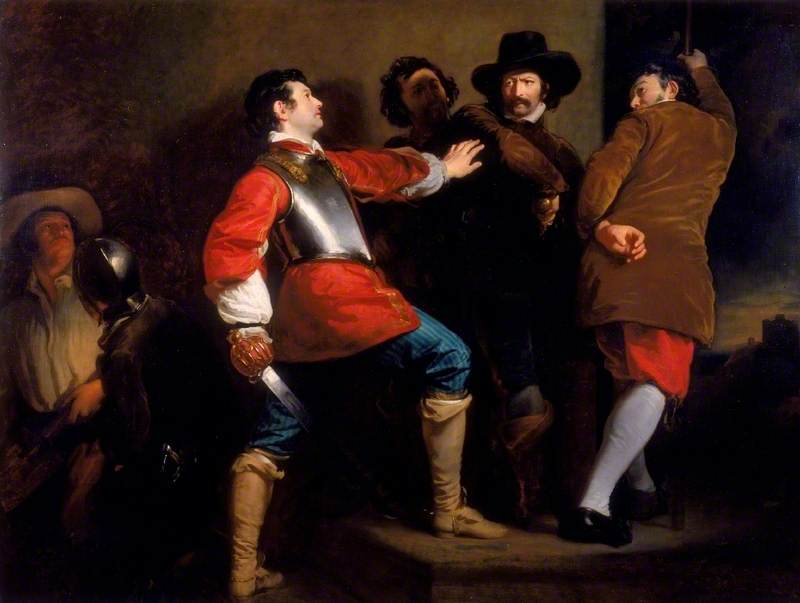
On the 4th of November, officials found Guy Fawkes next to lots of firewood. He lied and said his name was John Johnson. He told them he was taking care of the wood for his boss.
The officials believed him at first. But later that night, they returned. This time, they found the explosives and arrested Fawkes.
Maybe because this was so surprising, Fawkes is remembered more than the other people in the plan.
The king and Parliament survived. Fawkes and the others had failed.
What Happened to the Men?
Fawkes was put into prison in the Tower of London and hurt badly when he refused to give the names of the others. But after a few days he gave up. All of the men were killed by the government for their crime.
Sadly, this event made the situation worse for Catholics in the country. They were treated even more badly for a long time.
So Why Is Guy Fawkes Night Special?
Guy Fawkes Night is celebrated because the plan to destroy the government failed. People lit big fires, rang church bells, and later used fireworks.
Before, it was a celebration against Catholics. But now, people do not think it is about religion at all.
How Do We Celebrate Today?
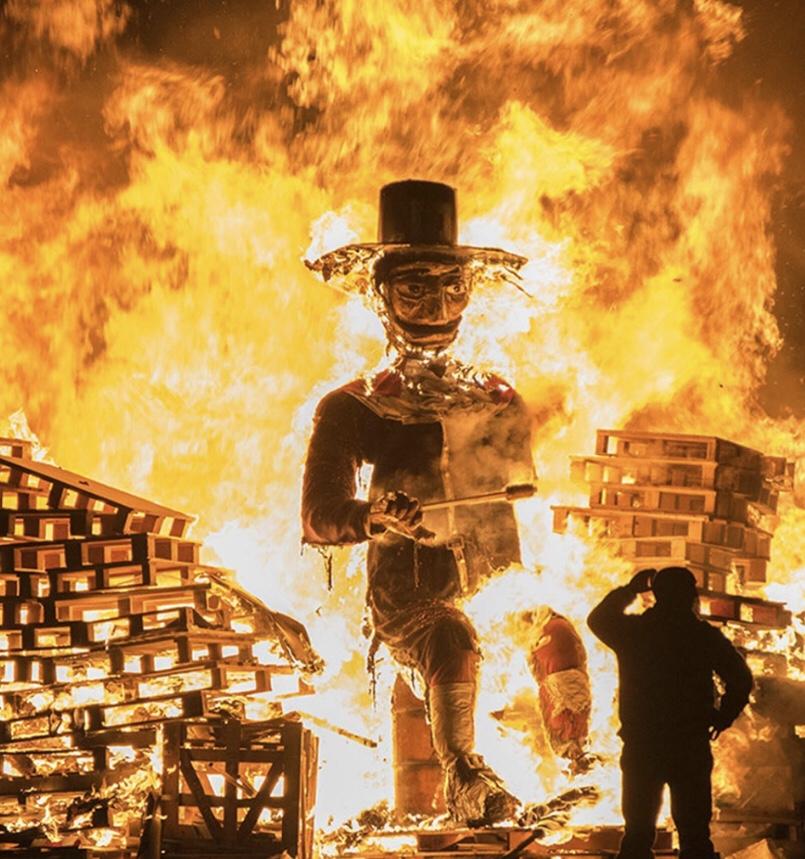
The most common celebration is a fireworks display. Towns and villages hold events with food, drinks, and large fires. Some people build figures of Guy Fawkes made out of wood. These are called “Guys” and people burn them on big fires together.
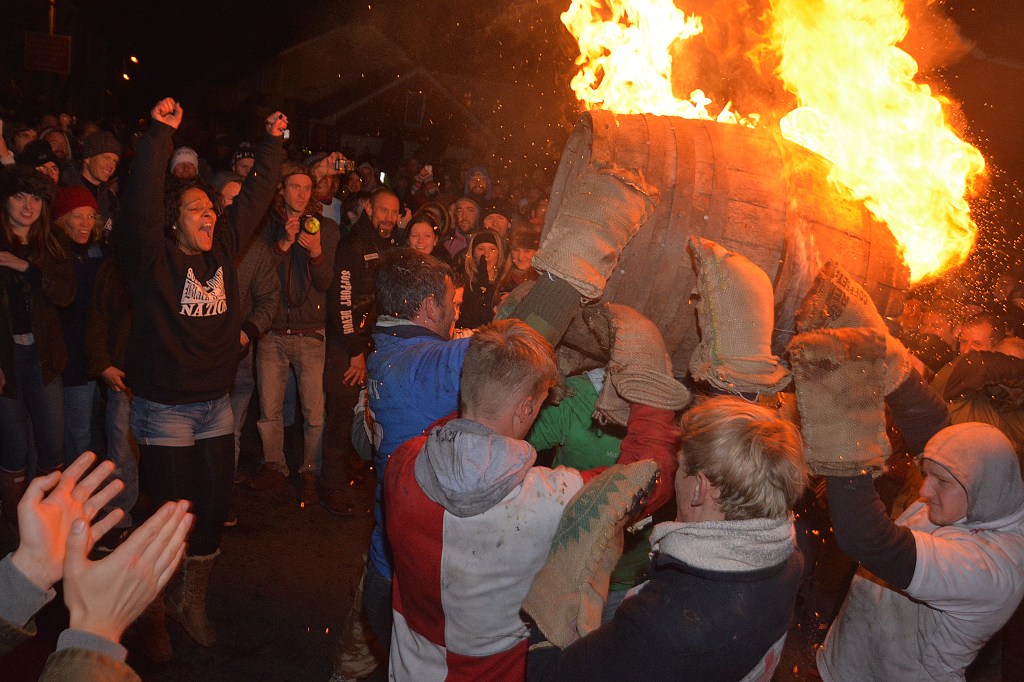
Some towns have unusual traditions. People in Lewes wear costumes, while people in Ottery St Mary carry burning barrels on their shoulders!
Guy Fawkes in the Modern World
Sometimes, British people are unhappy with the government. Then, we joke that we celebrate the fact that someone tried to blow up Parliament instead of the fact that it failed.
Usually, it is just a joke. But Guy Fawkes also affects modern life too.
The story became famous in the film V for Vendetta. In the film, a man called V fights a very strict and bad government. V wears a Guy Fawkes mask the whole film. Some modern protesters and hacker groups also wear the same mask. They do this to say they are also fighting bad governments or people.
It is interesting how a historical event can be used for different reasons in modern times.
Most people say we should not use violence to fight bad governments. But maybe both governments and their people should always remember, remember, the 5th of November.
Your turn
Here are some questions to increase your understanding and help you remember any new vocabulary. Try answering them with a friend or tutor, or write the answers down. Try to use any new vocabulary in your answers.
- Do people in your country have bonfires or fireworks at festivals? When do they have them?
- Guy Fawkes is more famous than the leader of the plan. Why do you think this is?
- What is your favourite festival or celebration? What do you do on that day?
- Some people burn figures of Guy Fawkes on Bonfire Night. Do you think this is a good tradition? Why or why not?
Did you find this level of English comfortable? Then congratulations! Now you can try the next level of difficulty below.
Level 2: Intermediate
Vocabulary
- Parliament (noun): The group of people who make the laws of a country. In the UK, it can also mean the building where they meet.
Example: Parliament passed a new law to protect workers. - To break away from (phrasal verb): To leave a group or organisation and stop being part of it.
Example: Three members decided to break away from the band and start their own group. - Their hopes were crushed (phrase): Something they really wanted did not happen, and they felt very disappointed.
Example: Their hopes were crushed when they found out their dream house had already been sold. - Plot (noun): A secret plan by a group of people to do something bad or against the law. Plot can also mean the story of a book or film.
Example: The police discovered a plot to steal money from the bank. - House of Lords (noun): One part of the UK Parliament. People do not vote for its members. The other part is the House of Commons.
Example: The House of Lords discussed the new law before it was passed. - Figurehead (noun): A person who looks like the leader but has no real power.
Example: The company’s president was only a figurehead because his brother made all the decisions. - Gunpowder (noun): A black powder that explodes when you light it. It is used in guns and fireworks.
Example: The soldiers kept the gunpowder in a dry place, away from fire. - Torture (noun/verb): Hurting someone very badly on purpose, often to make them give information. Can be used casually
Example: The prisoners were tortured because they refused to answer questions.
Example: That last meeting was torture. I was so bored. - Confession (noun): When someone says or writes that they did something wrong or against the law.
Example: After stealing the money, the man made a confession to the police. - Bonfire (noun): A large fire that people build outside, often for a celebration.
Example: We sat around the bonfire and talked with our friends. - Oppression (noun) / Oppressive (adjective): When people in power treat others in a cruel and unfair way and do not let them be free.
Example: Many people protested against the oppressive government because they wanted more freedom.
Text
Remember, remember, the fifth of November,
Gunpowder, treason and plot.
I know of no reason
Why gunpowder treason
Should ever be forgot.
– Traditional English rhyme (author unknown)
Why do so many British people know this rhyme? Why do Brits gather together on the 5th of November – a night known as Guy Fawkes Night, Bonfire Night, or Fireworks Night – and burn large figures of a man?
While this festival never became as popular internationally as Halloween, its origin is dramatic, and its symbols are still used in unexpected ways today.
Historical Background
This tradition began with the failed Gunpowder Plot of 1605, when a group of English Catholics attempted to blow up King James I and Parliament.
This happened during a time of religious conflict in Europe, especially between two types of Christians. Many people stopped being Catholics and became Protestants instead. These conflicts continued for a long time.
England was traditionally Catholic until King Henry VIII broke away from the Catholic Church in the 1530s and took control of the Church of England. After this, England became more and more Protestant.
In 1603, when James I became king of England, Catholics hoped he would give them more religious freedom as his mother was Catholic. Up until then, they had faced fines for not attending Protestant church services, and Catholic priests could even be imprisoned or executed. But their hopes were crushed, and these restrictions continued.
And so, in this time of intolerance and oppression, a plot was created.
The Plot Begins
In May 1604, Robert Catesby, a Catholic gentleman, and four other men met secretly in London. They planned to destroy the English government and murder the king.
Their goal was to blow up the House of Lords when many of the religious and political leaders would be there. Afterwards, they planned to kidnap the king’s young daughter, Princess Elizabeth, and use her as a figurehead for a new government.
In the end, the plot involved 13 men. But one of the original five was Guy Fawkes.
Fawkes grew up in a Protestant family but later became Catholic. He fought in the Spanish army against the Dutch for a while and had experience with gunpowder. Because of this experience, they chose him to guard and prepare the gunpowder.
Some say that they first tried to dig a tunnel beneath Parliament and failed. Instead, they rented a storeroom directly beneath the House of Lords. They secretly placed 36 barrels of gunpowder inside and hid them beneath firewood.
The opening of Parliament was finally scheduled for the 5th of November, 1605. This was the day they would strike.
The Plot is Found Out
In October, a Catholic nobleman named Lord Monteagle received an anonymous letter warning him not to go to Parliament. He gave it to one of the king’s ministers, and the warning reached the king. Despite this, the plan continued.
On the 4th of November, officials found Guy Fawkes next to a large quantity of firewood beneath the House of Lords. He said his name was John Johnson and that he was a servant.
The officials believed him at first. But later that night, they returned and searched again. This time, they found the 36 barrels of gunpowder and arrested Fawkes.
Maybe because of this shocking discovery, Fawkes is remembered more than the other people in the plot, including their leader, Robert Catesby.
The king and Parliament survived. Fawkes and the others had failed.
Serious Consequences
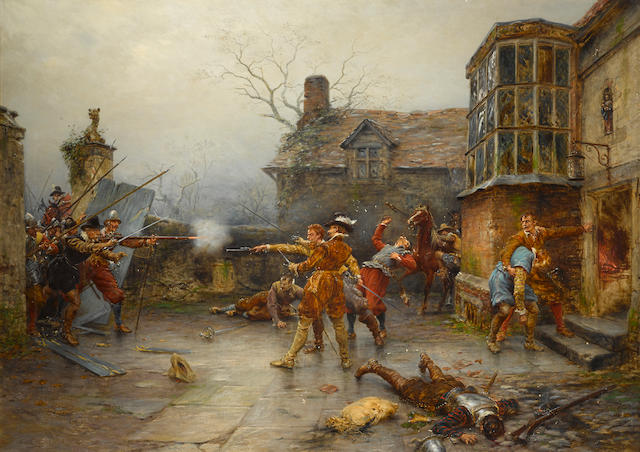
After Fawkes’ arrest, officials searched for the others. Some were killed while fighting government forces; others were arrested. Fawkes was imprisoned in the Tower of London and tortured when he refused to give the names of the others.
When he signed a confession a few days later, his writing was weak and almost impossible to read because of the torture. The surviving members of the plot were sentenced to a brutal punishment and death.
Sadly, the actions of these few men made the situation worse for Catholics in general. Parliament introduced further restrictions, and discrimination continued for generations.
Why Is Guy Fawkes Night Celebrated?
Guy Fawkes Night originally celebrated the failure of the plot and the survival of King James I. People lit bonfires, rang church bells, and later used fireworks. Parliament created a law making the 5th of November an annual day of thanksgiving.
The celebrations were often very anti-Catholic. People sometimes burned figures of the Pope. Later, these were replaced by figures of Guy Fawkes.
Over time, the religious meaning became less important, and today, most people never think about its religious origins.
How Do We Celebrate Today?
The most common celebration is a fireworks display. Towns and villages hold events with food, drinks, and large bonfires. Some people build figures of Guy Fawkes, called “Guys”, to burn on the fire. In the past, children carried small versions of them around, asking for money. They would say ‘Penny for the Guy?’
Some towns have unusual traditions. People in Lewes, in East Sussex, walk down the street with costumes, burning figures, and impressive shows. People in Ottery St Mary, Devon, carry burning barrels on their shoulders as they walk, or run, down the street.
The Modern Guy
When British people are unhappy with the government, we sometimes joke that we celebrate the attempt to blow up Parliament, rather than its failure.
A joke, perhaps, but Guy Fawkes has also become a symbol of resistance against oppression. This is partly because of the graphic novel and film V for Vendetta, in which a man called V fights an oppressive government in a future Britain. He wears a Guy Fawkes mask. Since then, some modern protesters and members of the hacker group Anonymous also wear the exact same mask.
It is an interesting change. Fawkes was a man who once tried to destroy a government and bring back a Church that many thought was oppressive. But today he is a symbol of resistance to oppression for some.
Violence is perhaps not the answer to fight against an oppressive government. But both governments and their people should always remember, remember, the 5th of November.
Your turn
Here are some questions to increase your understanding and help you remember any new vocabulary. Try answering them with a friend or tutor, or write the answers down. Try to use any new vocabulary in your answers.
- Someone sent Lord Monteagle a letter to warn him about the plot. If you knew a friend was planning something dangerous, would you tell someone? What if it meant your friend would get into serious trouble?
- After the plot, life became harder for all Catholics. Can you think of other times when a whole group of people was blamed for the actions of a few?
- In Ottery St Mary, people run through the streets carrying burning barrels. Should dangerous traditions like this continue, or should they be stopped for safety reasons?
- British people sometimes joke about the attempt to blow up Parliament. Is it OK to make jokes about serious or violent events from history?
Did you find this level of English comfortable? Then congratulations! Now you can try the next level of difficulty below.
https://commons.wikimedia.org/wiki/File%3AThe_Gunpowder_Plot_-_The_conspirators%E2%80%99_last_stand_at_Holbeach_House.jpg
Level 3: Advanced
Vocabulary
- Effigy (noun): A rough model of a real person, often made to be burnt or damaged in protest or celebration.
Example: The protesters made an effigy of the politician and carried it through the streets. - Intertwined (adjective): So closely connected that one thing cannot easily be separated from the other.
Example: Their lives became intertwined after working together for twenty years. - Afoot (adjective): Happening or being planned, often in secret.
Example: The children were whispering, so their teacher knew something was afoot. - Figurehead (noun): A person who appears to be the leader but has no real power.
Example: The company’s president was only a figurehead; his assistants made all the important decisions. - Illegible (adjective): Impossible or very difficult to read.
Example: The doctor’s handwriting was so messy that it was almost illegible. - Persecution (noun): Cruel or unfair treatment of a group of people, especially because of their religion, race, or political beliefs.
Example: Thousands of families left their country to escape religious persecution. - Ineptitude (noun): A lack of skill or ability that leads to mistakes or failure.
Example: The team’s ineptitude caused them to lose ten games in a row. - Vigilante (noun): A person who punishes suspected criminals themselves, without any legal authority.
Example: A masked vigilante caught the thieves because he believed the police were not doing enough.
Text
Remember, remember, the fifth of November,
Gunpowder, treason and plot.
I know of no reason
Why gunpowder treason
Should ever be forgot.
– Traditional English rhyme (author unknown)
Why do so many British people know this rhyme? Why do Brits gather together on the night of the 5th of November – a night known as Guy Fawkes Night, Bonfire Night, or Fireworks Night – and burn large wooden effigies of a man?
While this festival never gained the international popularity of, say, Halloween, its origin is dramatic, and its symbolism has been adapted and used in unexpected ways today.
Historical Background
This tradition originated from the failed Gunpowder Plot of 1605, when a group of English Catholics attempted to assassinate King James I and destroy Parliament using explosives.
This was around the time of the Protestant Reformation, a period of high religious tension in Europe, in which many started to reject the authority of the Catholic Church in favour of Protestantism. The conflicts between these two branches of Christianity, Catholicism and Protestantism, would continue for centuries and shape much of European history.
England had traditionally been a Catholic country until King Henry VIII rejected the authority of the Pope in the 1530s and established control over the Church of England. Over the following decades, England would become increasingly Protestant, with persecution from both sides at various points.
Religion and politics were closely intertwined during this period, and religious differences were connected to ideas of political loyalty.
In 1603, when James I became King of England, Catholics hoped that he would introduce greater religious tolerance since his own mother was a Catholic. They had faced severe restrictions during this period, including fines for not attending Protestant church and the imprisonment or even execution of Catholic priests.
But their hopes were crushed, and the restrictions continued.
Dissatisfaction among the Catholic population grew. For some, it became too much, while others saw opportunity.
And so it was in this swirling mix of intolerance and oppression that a plot emerged.
The Plot is Afoot
In May 1604, Robert Catesby, a Catholic gentleman, and four other men met in London to forge a plan to destroy the English government and murder the king.
Their goal was to blow up the House of Lords during the State Opening of Parliament, when the king, members of Parliament, and many important political and religious leaders would be gathered together in one place. After that, they planned to kidnap the king’s young daughter, Princess Elizabeth, and to use her as a figurehead to form a new government.
While the conspiracy would eventually involve 13 men, one of the original five meeting secretly there in London was one Guy Fawkes.
Guy Fawkes was a military man. He had grown up in a Protestant family until his father died and his mother remarried. He converted to Catholicism and then later served in the Spanish army, fighting against Protestant Dutch forces, where he gained knowledge of gunpowder and explosives. It was due to this experience and his strong support of Catholicism that he was included in the plot, for it would be Guy who would be responsible for guarding and preparing the gunpowder.
It is said that the conspirators initially rented a building near the House of Lords and attempted to dig a tunnel beneath Parliament before abandoning this plan for a better alternative, renting a storeroom directly beneath the House of Lords. Over the following months, they secretly transported 36 barrels of gunpowder into the room, concealing them beneath firewood.
The State Opening of Parliament was postponed several times before being scheduled for the 5th of November 1605. This was the day the plotters would strike.
The Plot Uncovered
In October 1605, a Catholic nobleman named Lord Monteagle received an anonymous letter warning him not to attend the opening of Parliament. Monteagle then gave the letter to one of the king’s ministers, and the warning eventually reached the king. Preparations were then made to search the buildings around Parliament the day before the meeting.
It is still not certain who sent the letter, but despite the warning of a plot, the conspirators still went ahead with their plan.
So on the 4th of November, officials started searching. And indeed, they did find Guy Fawkes near a very large quantity of firewood beneath the House of Lords. Guy managed to convince the officials that he was a servant named John Johnson and was looking after his master’s property, the fuel for winter.
This seemed to satisfy the officials initially, but later that night, they returned and conducted another, more thorough search. This time, they discovered the 36 barrels of gunpowder that had been concealed beneath the firewood and arrested Fawkes.
The startling image of Guy being discovered next to such a dangerous amount of explosive, just hours before the king was to be assassinated and Parliament destroyed, is perhaps the reason why he is remembered much more than the other conspirators, including the leader, Robert Catesby.
The assassination attempt had been prevented, and King James I and Parliament survived.
Grave Consequences
After Fawkes’s arrest, the authorities began searching for the other conspirators. Several were killed in confrontations with government forces; others were arrested. Guy himself was imprisoned in the Tower of London. He was interrogated about the conspiracy, and when he refused to reveal the identities of the others, he was tortured.
When he eventually signed a confession a few days later, the marks on the page were weak, almost illegible, no doubt due to the effects of his mistreatment. All the surviving conspirators were found guilty and sentenced to be hanged, drawn, and quartered, a particularly brutal punishment traditionally used for treason.
Sadly, even though the plot was attempted by only a few men, hostility increased towards the entire Catholic population. Parliament introduced additional restrictions on Catholics, and religious discrimination continued for generations, with Catholics remaining excluded from many areas of political and public life.
Why Is Guy Fawkes Night Celebrated?
Guy Fawkes Night originally celebrated the failure of the Gunpowder Plot and the survival of King James I, rather than the actions of Guy Fawkes. People would light bonfires, ring church bells, and use fireworks. Parliament later passed a law establishing 5th of November as an annual day of thanksgiving for the king’s survival.
These celebrations often carried with them heavy anti-Catholic sentiments, sometimes including burning effigies of the Pope. But as religious tensions declined, the burning effigy of the Pope was increasingly replaced with the figure of Guy Fawkes.
The religious nature of the celebration gradually declined, and by the twentieth century, the night became more closely associated with fireworks, community gatherings, and family entertainment. Today, most people celebrate the occasion in this spirit, without much thought for the religious origins.
How Do We Celebrate Today?
The most common way to celebrate Bonfire Night is by attending a fireworks display. Towns, villages, schools, and community organisations often arrange public events with food, drink, and socialising. The large bonfires are an important part of the celebration, and sometimes children are encouraged to build wooden or straw effigies of “The Guy” in order to burn them. Historically, children also carried homemade “Guys” around and asked people for money, using the expression ‘Penny for the Guy?’
These effigies can be large indeed, and the sight of one burning on a great bonfire is a unique one in our modern world. Other places prefer to only include fireworks and a bonfire in their celebrations these days, though the burning of effigies continues in many parts of the UK.
Some towns have developed unique Bonfire Night traditions. For example, Lewes, East Sussex, holds spectacular processions through the streets with lots of elaborate costumes and effigies, while the people of Ottery St Mary, Devon, are known for carrying burning tar barrels through the streets on their shoulders. Videos of these can often be found online for those who are interested.
Even though the original room where the gunpowder was concealed no longer exists, a ceremonial search of the Palace of Westminster before the State Opening of Parliament is still conducted to this day.
The Modern Guy
In times when the British people are despairing at the ineptitude of one government or another, we occasionally joke that we celebrate the attempt to blow up Parliament every 5th of November, rather than the failure.
A joke, perhaps, but the image of Guy Fawkes has also become closely connected to resistance against oppression in the modern world. This is partly due to the well-known graphic novel and later film V for Vendetta, in which a vigilante fights against an authoritarian regime in a future dystopian Britain. The rebel, known only as V, wears a Guy Fawkes mask throughout the whole film. This has inspired members of various protest movements, as well as the hacker group Anonymous, to wear the same Guy Fawkes mask.
There is an interesting irony in how Guy Fawkes is remembered today. A man once condemned as a traitor for attempting to overthrow the government and restore the authority of a Church that many Protestants viewed as oppressive has since become, for some, a symbol of resistance against oppressive authority.
And perhaps, while violence is not the answer when states turn oppressive, both governments and their people would do well to remember, remember, the 5th of November.
For more information about the 5th of November, feel free to check out the UK Parliament’s website here.
UK Parliament – The Gunpowder Plot of 1605
Your turn
Here are some questions to increase your understanding and help you remember any new vocabulary. You can answer them with a friend or tutor, or write the answers down. Try to use any new vocabulary in your answers.
- Why do you think history sometimes changes how we see people who were once considered villains?
- Guy Fawkes is remembered far more than the actual leader of the plot. Do you think the people who become famous from historical events are usually the most important ones, or just the most memorable? Can you think of any other examples?
- Many people celebrate Bonfire Night today without thinking about its religious origins. Is it a problem when a tradition loses its original meaning, or is it natural for traditions to change over time?
- When, if ever, do you think it is right for people to resist their government, and what forms should that resistance take?
About the author
Joe Robert Tuckwell is an English tutor and the creator of English with Ideas.
https://www.shutterstock.com/image-photo/guy-fawkes-bonfire-during-5th-november-510711715
(Below) Ottery St Mary : Tar Barrels at Yonder Street by Lewis Clarke, CC BY-SA 2.0, via Wikimedia Commons